
New updated data to prevent avoidable blindness in Bolivia
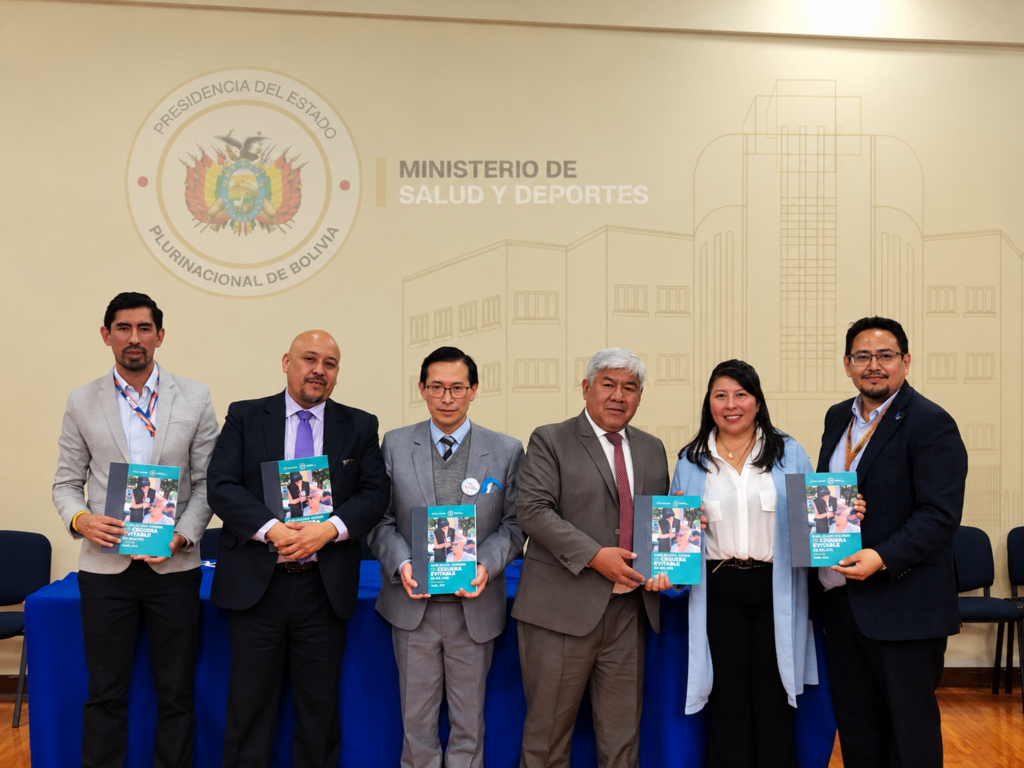
As part of World Sight Day, celebrated on 8 October, the presentation of the results of the RAAB study (Rapid Assessment of Avoidable Blindness) took place in La Paz, led by the Ministry of Health and Sports with the collaboration of the Eyes of the world Foundation.
The study examined 2,273 people aged over 50 in La Paz, Cochabamba, Santa Cruz, Oruro and Tarija to assess the state of eye health in the country, providing revealing data:
- 90% of vision loss cases can be prevented or treated.
- Cataracts account for 55.3% of cases of avoidable blindness and 67.9% of severe visual impairment.
- Uncorrected refractive errors are the cause of 54.3% of cases of moderate visual impairment and 78.7% of cases of mild visual impairment.
The research was led by the Ministry, through its Eye Health Unit, by bringing together public and private institutions, cooperation organisations, communities and researchers. Participants included the National Institute of Ophthalmology, the Bolivian Institute for Blindness, the Bolivian Society of Ophthalmology, the Departmental Health Services, Buena Visión Internacional (GoodVision), Moya Vision, Fundassil, Fundación Visión and, as coordinating organisations, PAHO/WHO and the International Agency for the Prevention of Blindness (IAPB). The research team included Dr João M. Furtado as Principal Investigator, Dr Adalid Ramos Valencia as the researcher in Bolivia and Dr Ricardo Pedro Casaroli Marano as the non-resident Co-Investigator.
“This study represents much more than the generation of new data on blindness and visual impairment in Bolivia. It represents the country’s effort to have up-to-date, scientifically robust information that allows us to better support the development of public policies,” highlighted Patricia Tárraga, Eyes of the world’s Coordinator in Bolivia.
Using these findings, the Ministry of Health and Sports is beginning the development of a new National Eye Health Plan focused on reducing barriers to strengthen primary eye care and bringing specialised services closer to rural and the country’s most vulnerable areas.
This study was made possible thanks to the collaboration of Lions Club (SightFirst), CBM Global, Banco Nacional de Bolivia, the Provincial Council of Bizkaia, the Government of Navarre, FOAL, Repsol Bolivia and Good Vision.