
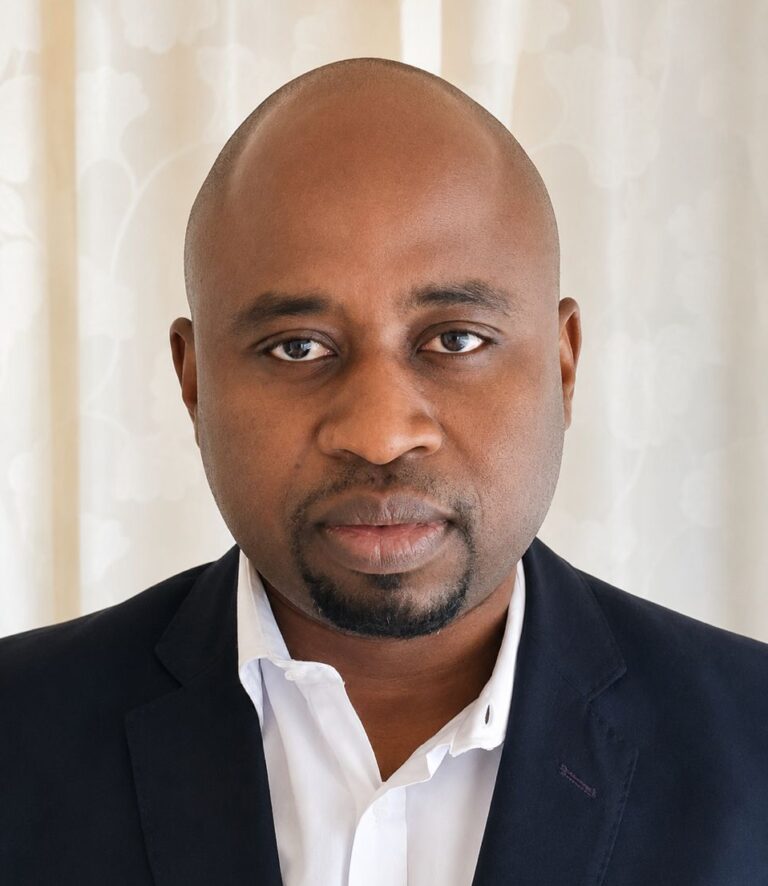
Abdoulaye Napo, head of the IOTA training department
Ophtalmologist and head of the training department at University Hospital Centre of the Institute of Tropical Ophthalmology of Africa (CHU-IOTA)
With more than fifteen years of experience, Dr Abdoulaye Napo specialises in the medical and surgical treatment of vitreoretinal diseases, glaucoma and cataracts. He combines clinical practice with research, teaching and his role as President of the Alliance for the Development of Community Ophthalmology (ADOC), which is dedicated to strengthening eye care services and modernising ophthalmology training in Mali and other African countries.
His relationship with Eyes of the world began in 2006, when he started his ophthalmology residency. Later, in 2010, he worked with the Foundation in the Mopti region as part of the free cataract surgery campaigns in Bandiagara. In addition, Eyes of the world supported his first post-residency training in 2012 at ESASO in Switzerland, on the recommendation of Vice-president Borja Corcóstegui. His collaboration has developed considerably since 2023, when he took responsibility for the training department at the University Hospital Centre of the Institute of Tropical Ophthalmology of Africa (CHU-IOTA), which receives support from Eyes of the world through study scholarships and the provision of equipment.
Thanks to the support of the Spanish Agency for International Development Cooperation (AECID), the Eyes of the world Foundation and Oftalmo University are promoting a training programme to strengthen the skills of CHU-IOTA professionals in cataract and retinal surgery using state-of-the-art simulators. The aim is for the knowledge acquired in Barcelona to be applied and subsequently transferred in Bamako, thereby helping to strengthen ophthalmic care in the country.
Dr Abdoulaye Napo has taken part in this programme and, in this interview, shares his experience during his stay in Barcelona.
You combine clinical practice with teaching and the training of new ophthalmologists. How important is it to invest in the training of local professionals in order to strengthen the country’s healthcare system?
For me, training is fundamental. We cannot improve healthcare sustainably without strengthening the skills of the professionals working on the ground. Our country needs well-trained specialists who are capable of treating patients, but also of passing on their knowledge to future generations. Training a doctor is not simply about teaching a technical procedure. It also means giving them confidence, enabling them to become independent and, in turn, to train other colleagues. This is how we can build a strong healthcare system and respond to the needs of our population.
What motivated you to take part in this training programme, and what were your expectations before arriving in Barcelona?
Before coming to Barcelona, I mainly hoped to improve my skills, learn how to use surgical simulators and understand how to integrate these tools into the training of young ophthalmologists in Mali.
Throughout the programme, three different groups have been trained: firstly, trainers of trainers (mentors) in cataract surgery; secondly, mentors specialising in retina; and finally, ophthalmologists training in cataract surgery. Why was this structure chosen, and what does each of these groups contribute to Mali’s healthcare system?
It is a very interesting approach because each group plays a complementary role. Cataract mentors will train and support young surgeons. Retina mentors will strengthen expertise in this specialty. Finally, young ophthalmologists will be able to improve their surgical practice. The aim is to create a continuous chain of training and knowledge transfer in Mali.
What are your impressions of the training carried out in Barcelona?
It was a very enriching experience, with highly competent trainers, modern equipment and plenty of practical work. I particularly appreciated the use of surgical simulators, which allow us to practise and gain confidence before operating on patients.
Now that the training has been completed, the ophthalmologists will return to Bamako to apply the knowledge they have acquired. What impact do you expect this programme to have on Mali’s ophthalmic care and on healthcare system?
I hope this programme will help improve the quality of our surgeries, strengthen our skills and provide better training for young ophthalmologists. We also hope to continue this cooperation with the Eyes of the world Foundation and Oftalmo University to keep promoting exchanges, training and knowledge transfer. Our goal is for this collaboration to have a lasting impact on the development of ophthalmology in Mali.
How would you describe the work of the Eyes of the World Foundation in Mali in three words?
Solidarity, cooperation and development. Solidarity because this project responds to the real needs of our healthcare system; cooperation because it brings together the expertise and experience of our institutions; and development because, thanks to the support of AECID, the Eyes of the World Foundation and Oftalmo University, we are helping to strengthen the training and independence of our healthcare professionals.
It is a collaboration that we hope will continue and grow stronger in the years ahead.